GenAI use cases for the physical world
Beyond the Screen: How Generative AI is Transforming Physical Business Operations
In the race to implement artificial intelligence, most businesses have focused on digital applications—chatbots, content creation, and data analysis. But the next frontier of GenAI isn't happening on screens; it's unfolding in warehouses, retail floors, and city streets. Generative AI is making the leap from the digital to the physical world, creating unprecedented opportunities for businesses ready to embrace this transformation. The economic stakes are significant: experts project GenAI applications will generate substantial annual value in the coming years, with physical-world implementations driving a substantial portion of this growth.
While digital GenAI has dominated headlines, forward-thinking organizations are quietly revolutionizing their physical operations—from retailers creating dynamic store layouts that respond to customer behavior, to manufacturers using generative design to optimize product development, to businesses partnering with municipalities on smart infrastructure that responds intelligently to real-world conditions. These physical applications represent not just incremental improvements but fundamental reimaginations of how businesses operate in three-dimensional space.
In this post, we'll explore how GenAI is transforming retail spaces, revolutionizing manufacturing processes, and building smarter infrastructure—revealing the competitive advantages available to businesses that successfully bridge the digital-physical divide.
Revolutionizing Retail Spaces

The retail landscape is undergoing a profound transformation as generative AI technologies bridge the gap between digital capabilities and physical shopping environments. Far from spelling the end of brick-and-mortar retail, GenAI is breathing new life into physical stores by creating experiences that online shopping simply cannot replicate.
According to McKinsey research, GenAI applications in physical settings could generate significant annual economic value globally in the coming years, with retail positioned as a key beneficiary of this technological revolution. Forward-thinking retailers are already leveraging these capabilities to reinvent the in-store experience.
Personalization, once the exclusive domain of e-commerce, has now entered physical retail through GenAI-powered systems. Smart mirrors equipped with computer vision can recommend complementary items based on what customers are trying on, while AI-driven visual merchandising dynamically adjusts product displays based on real-time customer behavior data and inventory levels.
"We're witnessing the beginning of retail's next great transformation," notes Greg Portell, a partner at Bain & Company. "GenAI is helping physical retailers create compelling reasons for customers to return to stores through experiences that simply cannot be replicated online."
Perhaps most significantly, GenAI is enabling truly seamless online-to-offline customer journeys. Retailers can now recognize returning customers (with appropriate privacy controls), access their preferences and purchase history, and create continuity between digital browsing and in-store shopping experiences. This omnichannel approach, powered by GenAI, helps retailers deliver personalized service at scale without compromising the human touch that makes in-store shopping special.
For business leaders in retail, the message is clear: GenAI isn't just another technology investment—it's rapidly becoming a competitive necessity. Those who strategically implement these solutions now will be positioned to capture market share as consumer expectations continue to evolve toward more personalized, friction-free shopping experiences.
Manufacturing's GenAI Transformation
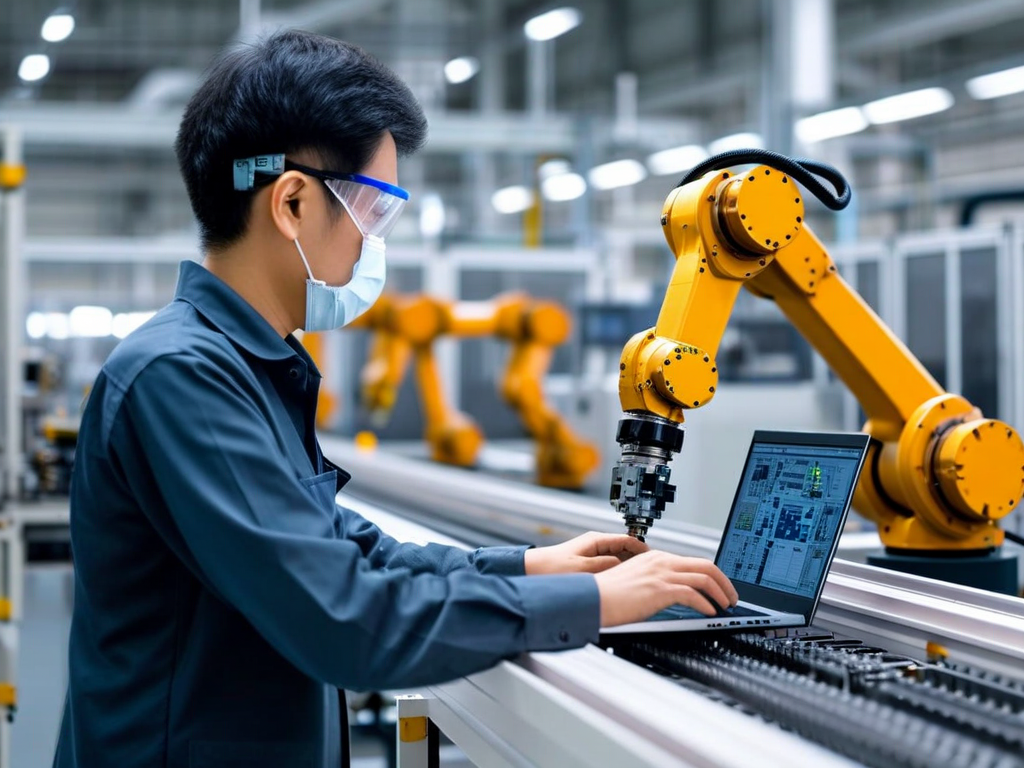
The manufacturing sector stands at the cusp of a profound transformation powered by Generative AI technologies that extend far beyond basic automation. While traditional AI has focused on process optimization, GenAI is revolutionizing the entire manufacturing value chain with measurable returns on investment.
Product design is experiencing a renaissance through GenAI tools that can generate thousands of design iterations based on specific parameters and constraints. Engineers can now explore previously unimaginable designs that optimize for weight, strength, material usage, and manufacturability simultaneously. For example, automotive manufacturers are using GenAI to create components that are more efficient and sustainable.
Predictive maintenance systems powered by GenAI are dramatically reducing downtime across production facilities. These systems analyze patterns from sensor data, historical maintenance records, and even acoustic signatures to predict equipment failures before they occur. One manufacturer reported significant improvements in uptime and cost savings after implementing GenAI-based predictive maintenance.
Supply chain resilience has become a critical priority, and GenAI is delivering solutions through advanced scenario planning and simulation. These systems can model potential disruption scenarios and recommend optimal inventory levels, alternative sourcing strategies, and production adjustments. This capability proved valuable during recent global supply chain crises, with companies using GenAI reporting faster recovery times than competitors.
Perhaps most exciting is GenAI's role in material science innovation. By exploring combinations of material properties and manufacturing techniques, GenAI is accelerating the development of novel materials with specific performance characteristics. This capability is particularly valuable in industries where material performance directly impacts product safety and effectiveness.
As experts note, success in manufacturing will come from viewing GenAI "not as a standalone technology but as an integrated component within physical operations," ultimately enhancing human capabilities rather than simply replacing them.
Building Smarter Infrastructure

In the rapidly evolving landscape of urban development, generative AI is emerging as a transformative force for infrastructure management. Municipal governments and forward-thinking businesses are forming strategic partnerships to leverage GenAI's capabilities, creating intelligent systems that respond dynamically to real-world conditions and needs.
Traffic management represents one of the most promising applications. GenAI systems analyze vast datasets from traffic cameras, sensors, and historical patterns to optimize signal timing in real-time. Cities implementing these solutions have reported reductions in congestion, significantly decreasing both commute times and carbon emissions. For businesses, this translates to improved logistics efficiency and reduced transportation costs.
Energy distribution networks are becoming increasingly complex with the integration of renewable sources. GenAI helps manage this complexity by predicting demand patterns and optimizing distribution. These systems can anticipate peak usage periods, allowing for proactive load balancing and preventing costly outages. Utility companies implementing these solutions have seen operational efficiency improvements.
Perhaps most intriguing is the concept of adaptive public spaces. GenAI is enabling the development of infrastructure that reconfigures based on usage patterns and environmental conditions. Smart lighting systems adjust brightness based on foot traffic, while public transportation routes can be dynamically altered based on real-time demand. These innovations not only improve user experiences but also deliver substantial energy and resource savings.
For businesses looking to enter the smart infrastructure market, the opportunity is substantial. According to recent projections, the global smart city market is expected to experience significant growth in the coming years, with GenAI-powered solutions representing a portion of this growth. Companies that can provide scalable, interoperable infrastructure solutions will be well-positioned to capture this expanding market.
The key to success lies in developing solutions that integrate seamlessly with existing infrastructure while providing clear ROI through efficiency gains, sustainability improvements, and enhanced user experiences.
Conclusion
Embracing the Future: GenAI in the Physical World
As we've explored throughout this article, generative AI is rapidly transcending the digital realm to transform physical operations across industries. From predictive maintenance systems that keep factory floors running smoothly to computer vision applications that enhance retail experiences, GenAI is bridging the gap between virtual capabilities and tangible outcomes. The technology's ability to optimize supply chains, personalize physical products, and create safer working environments demonstrates its versatility as a business tool with concrete ROI.
The organizations gaining competitive advantage today aren't just experimenting with GenAI—they're strategically implementing it to solve real-world challenges and create measurable value. As these technologies become more accessible and refined, businesses of all sizes have unprecedented opportunities to innovate their physical operations.
Don't let your company fall behind in this transformative wave. Begin by identifying one physical process in your operation that could benefit from GenAI enhancement. Schedule a cross-functional workshop to explore potential use cases, and consider partnering with AI specialists who understand your industry's unique physical constraints. The fusion of generative AI with the physical world isn't just the future—it's happening now, and your business strategy should reflect this powerful convergence.
Note: This content has been fact-checked for accuracy.


Comments
Post a Comment